

Late Payment Interest on Invoices (UK) :
The Late Payment of Commercial Debts (Interest) Act Explained

Late payment is one of the quickest ways to damage a small business’s cash flow. If you’re delivering a service, paying staff, and covering suppliers, you shouldn’t also be funding a customer who can’t – or won’t – pay on time.
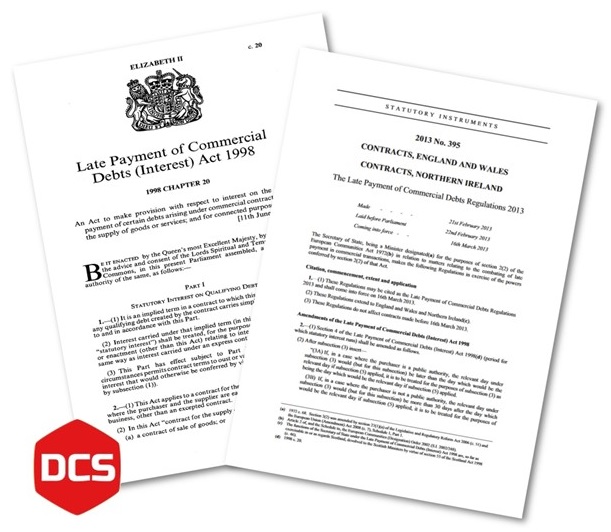
The good news: in many B2B situations, UK law gives businesses the right to add statutory interest and late payment compensation when an invoice goes overdue. The relevant legislation is the Late Payment of Commercial Debts (Interest) Act.
On this page, we explain what the Act means in plain English, what you may be entitled to add, and how DCS can help you recover overdue invoices professionally – without turning it into a shouting match or damaging relationships.
Who the Late Payment Act applies to (and who it doesn’t)
This legislation is designed for commercial debts; in other words, when a business supplies goods or services and another business pays late.
In practice, it’s most relevant for:
- UK SMEs supplying other UK businesses
- Trade accounts and ongoing commercial relationships
- Service businesses where the work has been delivered and the invoice is now overdue (common in hospitality, events, and commercial laundry)
Neither business needs to be a limited company; the transactions simply need to both be in business.
Just as importantly, it’s not a “one-size-fits-all” rule for every type of debt. For example, DCS focuses on B2B debt recovery and does not handle consumer credit debts regulated by the Consumer Credit Act.
If you’re unsure whether your situation qualifies, the fastest route is to have the invoice, terms, and correspondence reviewed – because the details matter.
What you can add to an overdue B2B invoice
Many business owners assume they can only chase the original invoice value. But where the Late Payment Act applies, you may be able to add:
1) Statutory interest (interest for being paid late)
Statutory interest exists for a simple reason: being paid late costs you money.
Even if a debtor eventually pays the invoice, the delay can cause:
- missed supplier payments
- payroll pressure
- time spent chasing instead of running the business
- knock-on late payment issues across your own accounts
Adding statutory interest changes the tone of the conversation. It signals that late payment isn’t “free” and that the debt is increasing the longer it’s ignored.
A single debt can include interest charges at various rates, depending on the date that each invoice became overdue. You can see the interest rates here – but, don’t worry, DCS will calculate the interest.
2) Fixed late payment compensation (a set amount per overdue invoice)
In many cases, you can also add a fixed compensation amount per overdue invoice. The purpose is to recognise the admin burden late payment creates – emails, calls, reminders, and the disruption to your day-to-day operations.
This is particularly useful when:
- you’re dealing with repeat late payers
- you’ve got multiple overdue invoices with the same customer
- you want a clear, lawful framework for escalation
3) Reasonable recovery costs (where applicable)
If the cost of recovering the debt is higher than the fixed compensation, you may be able to claim additional reasonable recovery costs in certain circumstances.
That’s one reason SMEs instruct a specialist: it’s not just “someone else chasing the money”. It’s a structured recovery approach that strengthens your position and reduces the time you spend going in circles.
Why using the Late Payment Act can improve your chances of getting paid
From our 20 years of experience, late payers often fall into one of these categories:
- they’re disorganised (and need a firm process)
- they’re prioritising other creditors (and need a reason to prioritise you)
- they’re avoiding you (and need direct, consistent follow-up)
- they’re in financial difficulty (and need a realistic payment plan)
Using statutory interest and compensation can help because it:
- creates urgency (the debt grows over time)
- makes the consequences of delay clear and lawful
- supports a firmer tone without becoming aggressive
- gives you a credible escalation path if they continue to ignore you
Don’t worry about calculating the interest charge, Compensation Entitlement and Additional Debt Collection Costs – DCS will calculate this and provide the information to the debtor in a comprehensive Statement of Debt. The debtor will receive further Statements from DCS until the case is resolved.
The common mistake: waiting too long (and hoping it sorts itself out)
A lot of SMEs wait because they don’t want to upset a customer. That’s understandable; especially if it’s a long-standing account.
But the longer an invoice sits unpaid, the harder it becomes to recover:
- the debtor gets used to not paying
- your leverage reduces
- the chance of insolvency increases
- you lose time you can’t get back
A relationship-first approach doesn’t mean being passive. It means being clear, consistent, and professional – and escalating in a structured way when needed.
A “good customer” is not a good customer if you’re not being paid!
How DCS approaches overdue invoices (firm, professional, relationship-first)
DCS is built for UK SMEs who want overdue invoices handled properly.
Here’s how we typically approach a case:
Step : Get the facts straight (so we don’t waste time)
You provide:
- the invoice(s)
- any agreed terms (where available)
- relevant correspondence (emails, messages, letters)
- key background (e.g., whether there’s a dispute)
This matters because the right approach depends on what’s happened so far.
Step : Confirm whether the debt is disputed
If a debt is disputed, the strategy changes. Where possible, we’ll work with you to:
- collect any undisputed amount
- clarify what’s actually being argued
- keep the process moving rather than letting the debtor hide behind vague objections
Step : Contact the debtor directly and professionally
We handle debtor communication directly. Our correspondence is clear and professional, and also makes clear to the debtor the potential consequences of them failing to address the matter. The initial correspondence to the debtor is sent using with Royal Mail Signed For (previously known as “Recorded Delivery”) or Royal Mail Special Delivery.
Once DCS is instructed, we ask that all correspondence goes through our office. This enables us to be informed of progress as well as avoiding any confusion by the client continuing to issue Statements to the debtor (for a different sum to what we are trying to collect).
The goal is to secure payment or a realistic plan; without you having to chase, and without turning it into a personal conflict.
Step : Apply statutory interest/fees where appropriate
Where the Late Payment Act applies, we’ll calculate and apply statutory additions in line with the legislation. This strengthens the recovery process and helps ensure late payment has real consequences. We provide the debtor with a detailed Statement of Debt, which provides a breakdown of the total debt and explains the legal basis for the additional charges added to the debt.
If you want to see how interest is calculated, you can also refer to the information elsewhere on our website: www.debtcollectionservice.uk/interest
Step : Escalate only when it makes sense
If a debtor ignores correspondence or refuses to engage, we’ll explain your options clearly and recommend next steps with reasons and costs; this may include County Court proceedings where appropriate.
The key is that you stay in control of the decision, with a clear view of cost, likelihood, and the most sensible route to recovery.
Fees: simple, transparent, and SME-friendly
SMEs don’t want surprises. DCS keeps pricing straightforward:
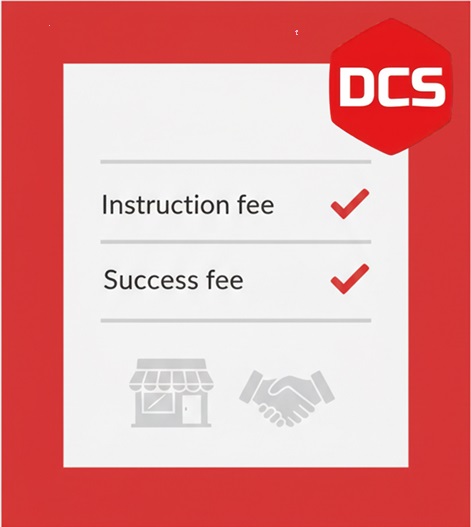
- £30 instruction fee per case
- Success-based commission once payment is received
If you have ongoing or bulk cases, volume discounts can be discussed.
Do you need help collecting an overdue payment?
Don’t delay, contact now:
or office@debtcollectionservice.uk
When to consider instructing a debt collection specialist
If any of these are true, it’s usually time to stop chasing and get it handled:
- the invoice is overdue, and you’re getting excuses or silence
- you’re spending time chasing instead of running your business
- the debtor is “promising to pay next week” every week
- you want to add statutory interest/compensation correctly and confidently
- you need a firm approach that still protects the customer relationship
What DCS need from you to get started
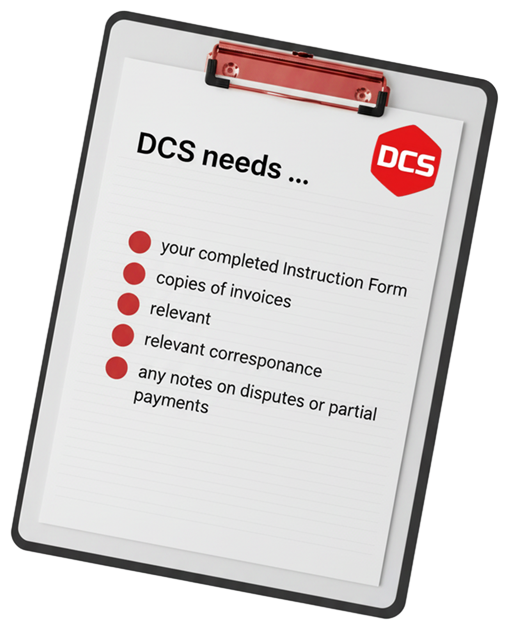
To move quickly, we typically need:
- your completed Instruction Form
- copies of invoices
- relevant correspondence (emails/messages)
- any notes on disputes or partial payments
Once we’ve got that, we can tell you what I recommend next and start debtor contact.
Speak to DCS about an overdue invoice
If you’re dealing with late payment and want it handled professionally, you can instruct DCS and get the pressure off your desk.
Simply contact us by phone 0117 370 4236 (any time) or email office@debtcollectionservice.uk to request an Instruction Form.

FAQs
Can I charge interest on an overdue invoice in the UK (business to business)?
In many B2B situations, yes. The Late Payment of Commercial Debts (Interest) Act can allow statutory interest on qualifying commercial debts. The specifics depend on the circumstances and any agreed terms.
What is late payment compensation?
It’s a fixed amount, known as “Compensation Entitlement” that may be added per overdue invoice (where the Act applies). It’s intended to recognise the cost and disruption caused by late payment.
Will adding interest and fees damage my customer relationship?
It can if handled badly. The advantage of using a specialist is keeping communication professional, consistent, and proportionate – so you’re more likely to get paid without unnecessary conflict.
What if the debtor disputes the invoice?
Disputed debts need a different approach. Where possible, the aim is to collect any undisputed amount while working with you to clarify and resolve the disputed element.
Do you collect consumer debts?
DCS specialises in B2B debt recovery for UK SMEs and does not handle debts regulated by the Consumer Credit Act.
Do you need help collecting an overdue invoice?
Don’t delay, contact DCS now!
office@debtcollectionservice.uk
0117 370 4236

 | DCS | Debt Collection Service Limited |